

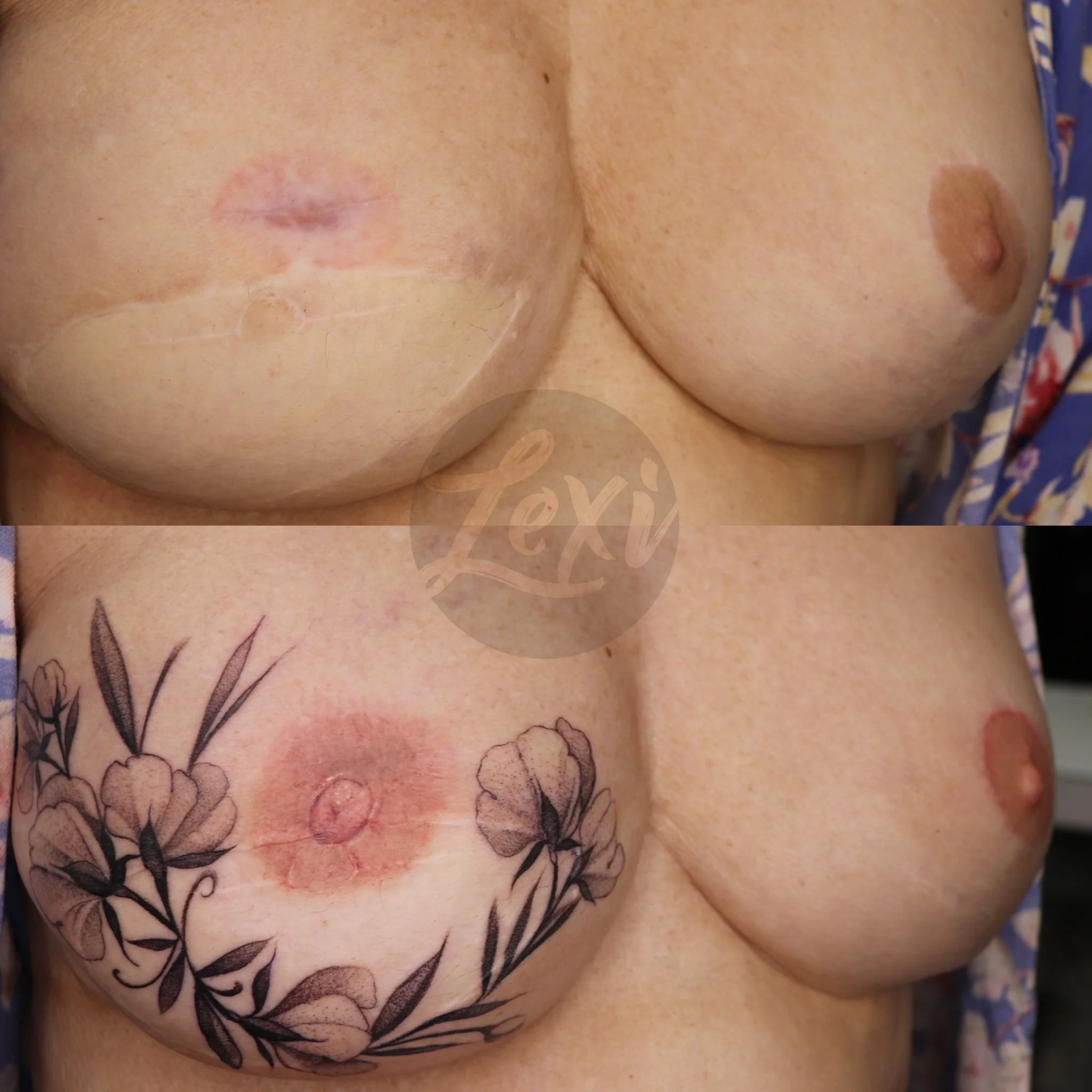
Fixing up old medical tattoos
In 2019, I trained in areola restorative tattooing. Since then, I have been closely observing medical tattoos, asking questions and trying to understand why so many of the tattoos I was correcting for patients had significant scar tissue, lacked realism and, frankly, were consistently subpar.
I recently found myself in a conversation with a former technician who had worked with a surgeon and assisted in the tattooing stage of breast reconstruction. They described how the procedure was performed.
The method was unlike anything I had ever learned about the art of tattooing. It was so far removed from the basic concept of implanting pigment with a tattoo needle. In fact, they did not use tattoo needles or any related equipment I was familiar with. According to their description, the machine scraped the breast skin to create a wound. A colour bath of pigment was then applied and left to soak in, and the skin was left to scab over.
Hearing this, I couldn’t help but question how much this approach contributed to the scar tissue I was seeing. Scraping already compromised breast tissue and disrupting the skin barrier could potentially cause further damage.
The impact goes beyond the physical. Disappointing results and repeated procedures can also affect a patient’s mental well-being. Some patients returned multiple times for this procedure.
Our ability to share knowledge has grown, our tools have evolved, and pigments have come a long way. Practising gold-standard tattoo techniques should be non-negotiable.
There is absolutely no good reason for any patient to receive poorly executed nipple and areola tattoos using outdated methods or equipment, or from someone with little to no experience or training in tattooing.
With the bar set so high in tattooing, natural, realistic results are possible.
Tattooing has been an art form for over 5,000 years. If the work we put into the world today is not our best or does not meet professional standards, where is the integrity in tattooing?
Integrity in tattooing lives in the daily choices of the artist, the ethics of the studio, and the respect behind the craft.
If you have old, faded medical tattoos and would like higher-quality work, please reach out. I’m happy to chat about what we can do to help.
If you’re a surgeon looking to offer the best possible outcome for your patients, I would love to connect.
— Lexi
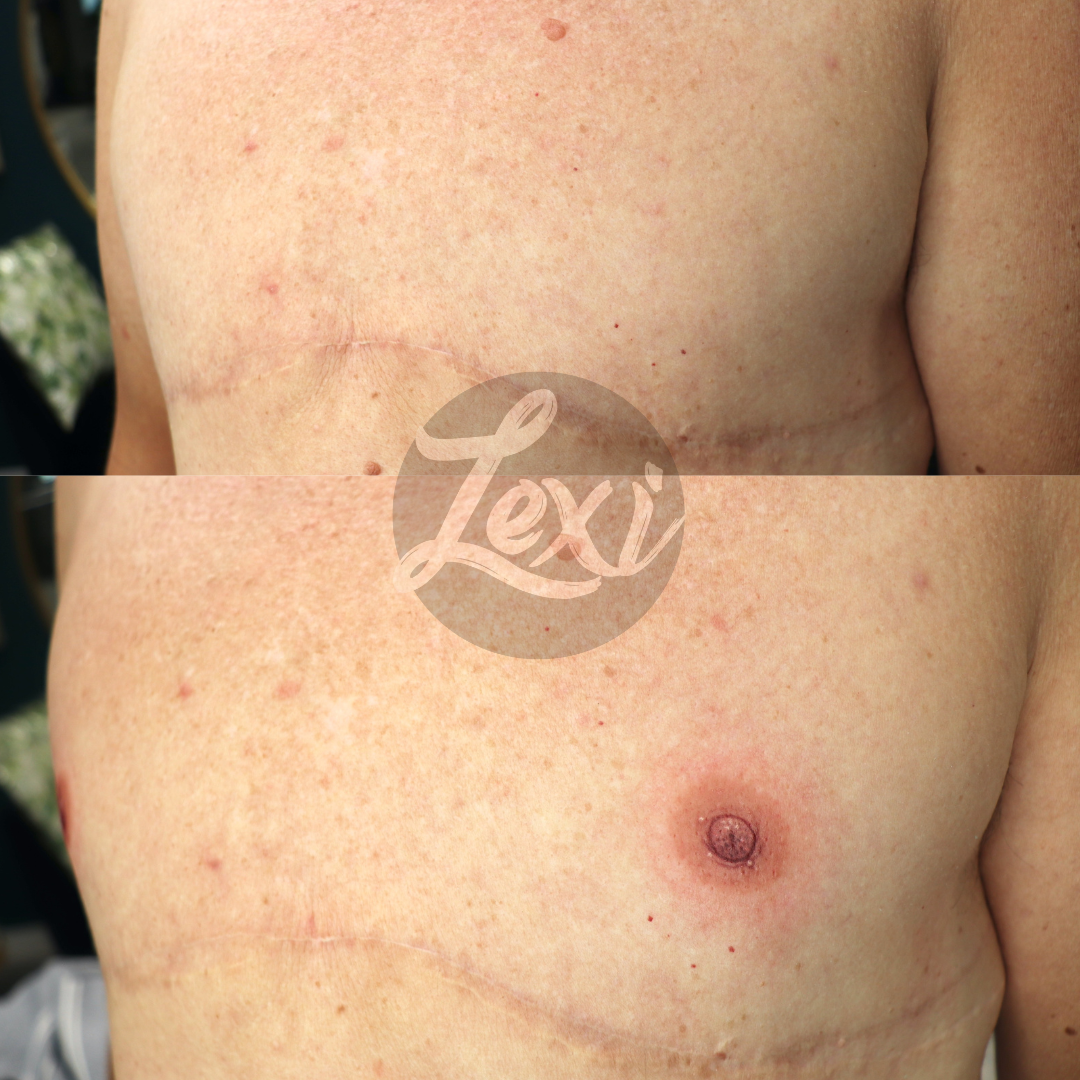
Nipple / Areola Complex Options after Gender Affirming Surgery
Planning gender-affirming top surgery comes with many choices, and your nipples are part of that conversation. Some people choose nipple grafts during surgery. Others choose to let their chest heal without grafts and add nipples and areolas later through restorative tattooing. You can also combine the two: a healed graft can be refined with tattooing.
If you choose nipple grafts, your surgeon repositions your own nipple and areola tissue during surgery. A graft may retain some physical projection. Once it has healed, tattooing can add colour, definition or visual balance. Grafts heal differently from person to person, so their final shape, texture and colour can vary.
If you choose tattooing without grafts, the chest heals first. A restorative tattoo artist can then design the nipple and areola’s placement, size, shape and colour with you. Shading creates the appearance of a three-dimensional nipple, while the skin remains physically flat.
This visual guide shows examples of both pathways to help you picture the possibilities; your own result will depend on your anatomy, surgery and healing.
There’s no single “right” choice. You might care most about physical projection, a particular placement, fewer surgical steps, or simply how you want to feel when you look in the mirror. Your surgeon can help you understand which surgical options are appropriate for you. After healing, I can work with you to create your dream nipples, correct any lost pigment and use needling techniques to help improve surgery scars.
I create custom restorative tattoos in the Calgary and Chestermere area. If you’re considering tattooing after top surgery, you’re welcome to get in touch and chat about the possibilities.
lexi.rae.hanna@gmail.com

Avenue Magazine - Innovator of the Week: Lexi Rae Hanna’s Restorative Tattoos Help Clients Feel at Home in Their Bodies
Hanna creates areola and nipple tattoos for people who have undergone mastectomies and gender-affirming surgeries.
Lexi Rae Hanna already had a decade of tattoo experience when she pursued certification in Areola Restorative Tattooing in 2019. Hanna was inspired to help people in similar circumstances to her auntie, who had been diagnosed with breast cancer. She contacted friend and fellow tattoo artist Stacie-Rae Weir, and under Weir’s tutelage, Hanna mastered the art of restorative tattooing, which she provides to clients who have undergone mastectomies or gender-affirming surgeries at Lexi Rae Tattoo.
Restorative tattooing, also known as paramedical tattooing, applies permanent makeup techniques to the creation of realistic areola and nipple tattoos and restores skin pigment in scarred areas. The practice requires years of expertise.
“It takes 10,000 hours to master something, right?” says Hanna. “That’s why it’s so important to have a solid tattooing background before doing this kind of work. A lot of people don’t know the quality of work that’s available to them.”
Hanna’s clients are often referred to her by AHS. Other times, clients reach out to her, having traveled from as far as Montana for her services. Hanna always begins these appointments with a consultation over a cup of tea to ensure clients feel comfortable with the drawings and colour matching, followed by a few hours of tattooing. The results are realistic areola tattoos that are more than just skin deep.
“A lot of people say they feel whole again,” Hanna says. “They look in the mirror and they didn’t realize how much it meant to them until they got it done.”
Every person’s healing journey is different. Some get reconstruction, some opt to stay flat, and others choose a pretty decorative chest tattoo to cover their scars. Regardless, Hanna’s goal is for her clients to feel more at home in their bodies by the time they leave her studio.

